

 back
back
die-cutting technology
14. September 2026
Systematic Separation. The Right Strategy for Efficient Blanking
Machine blanking is becoming increasingly important in packaging production. Even for smaller print runs or simple layouts, blanks are often separated directly in the blanking station today. This ensures efficient workflows and lays the foundation for reliable post-processing in downstream operations.
However, which technology is the best choice depends on various factors. In addition to the print run size, factors such as the sheet layout, material properties, and the requirements of further processing, among other things, play a decisive role. Using the station as a full sheet delivery can also be a cost-effective alternative, depending on the application.
“Efficient blanking starts with the right strategy. Those who optimally tailor the tool and process to the respective job create the conditions for high machine performance and reliable post-processing,” explains Bernhard Reisser, Industry Manager for paperboard packaging at Marbach.
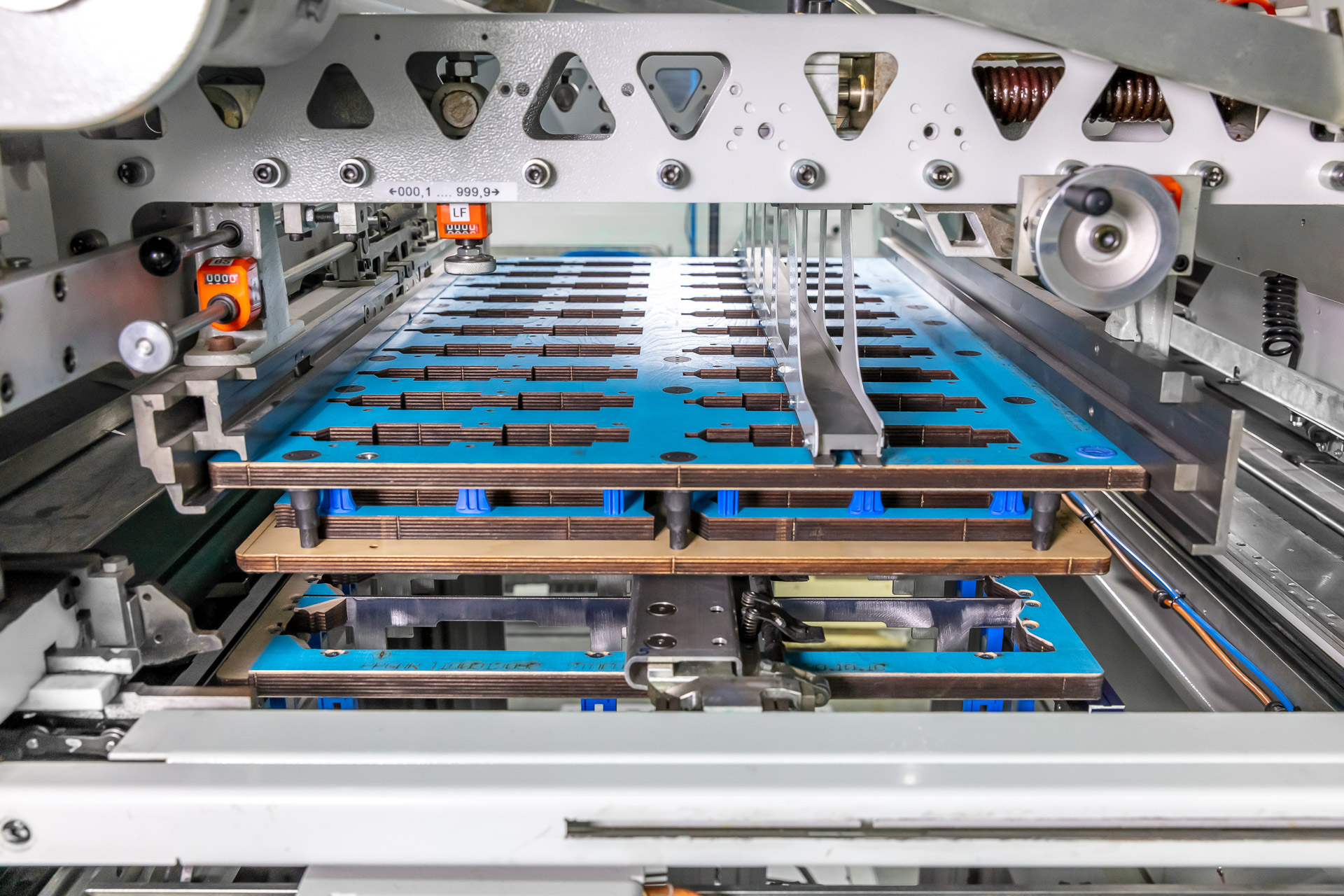
We offer various die-cutting technologies to meet different requirements. The alublanker impresses with its high-precision, one-piece aluminum construction, which combines low weight with high stability. The lightblanker is particularly flexible as a modular system: Its base frame remains in the machine, while only the job-specific separating grid is changed. For applications with the highest demands on cost-effectiveness and performance, the marbablanker offers a lightweight yet stable solution. The portfolio is rounded out by the compactblanker, which is specifically designed for complex layouts with the highest stability requirements.
